I suppose I have been dealing with mental illness in some form for the entirety of my life. I have been climbing the cliff for a long time. The path set before me has been challenging, to say the least. As a child, I was shy and quiet. I rarely smiled in public. Memories change and twist as years press on, but looking back I wonder if I had the energy to smile. Possibly I hid my battle deep inside, away from the eyes of those looking on. I had a happy childhood, no complaints and no regrets. I had no reason to frown, yet my face was frozen. Leading up to my first bout with depression, I cried myself to sleep every night. I didn’t recognize what I was up against.
I was usually a happy kid, though I was often sad and angry. My little sister, Jessica, had a bedroom next to mine. We fought a lot. After an evening fight, we would wake up the next day and forget the reason for our discord. The point was moot. We share a deep connection, and love each other unconditionally. She would come to my door at night, hearing me weep. She was concerned for me, as always. I turned her away, even though she only meant to help. I wanted to be alone in my grief over intangible issues. Years flew by like butterflies drifting in the wind, fighting for their lives. What happened? Who was I? Who am I now?
I am curious about how different my life may have been if only I were not born this way. When I ponder this topic, I realize that I was born this way for a reason. Without my experience, I could not help others. If there were a cure, I would not entertain the idea. My mental illness is not who I am, but it is certainly part of my identity.
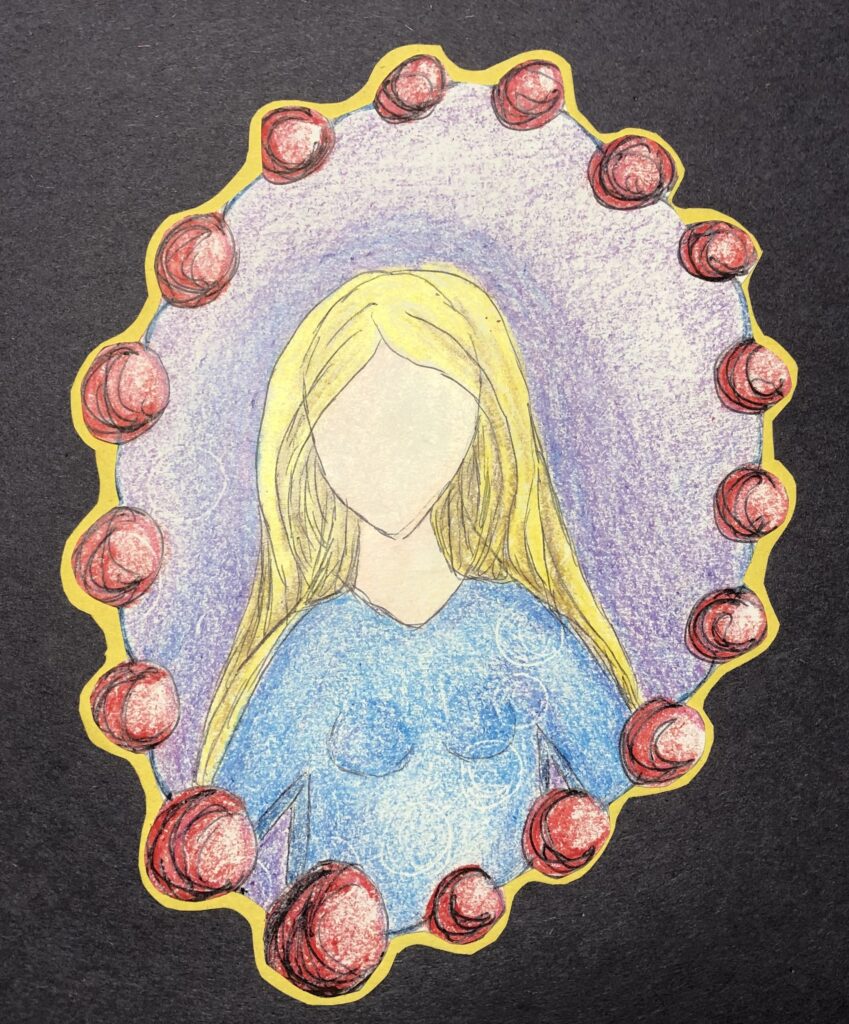
I think about that shy and quiet little girl. She was sad. She was anxious. She was young. She was brave. I am no longer shy or quiet. I over-share. I ramble. I repeat myself more than often. That little girl travels within my heart and I will always protect her. I hope she would be proud of me now. I opened my mouth and let out her story. Now, I smile.
I have returned! Sorry to keep you waiting. Here is a short story about a tiny friend of mine. I hope you enjoy it!
This is a true story. Mostly.
Once Upon a Time…there was a very full queen bee. She had the potential to produce more worker bees to work in her hive, and also to deliver very few daughters. She would die soon after giving birth. Her female children fought to be the next queen. One lucky worker bee would be chosen to mate with the reining princess, and the competition was fierce. During this life cycle, the female champion and heir to the throne was named “Honey.”
You may not know this, but male bees are aggressive. They can be bullies, and can really damage each other when fighting for a cause. They are territorial and protective of family and friends, and brutal in a fight for the queen. Others try to fly under the radar and not make waves. They want to live peaceful lives away from confrontation. However; this cannot always come to pass. Bees who stray from the hive are found and punished. The male bees swarm around the “traitor,” and harm him in ways he doesn’t deserve.
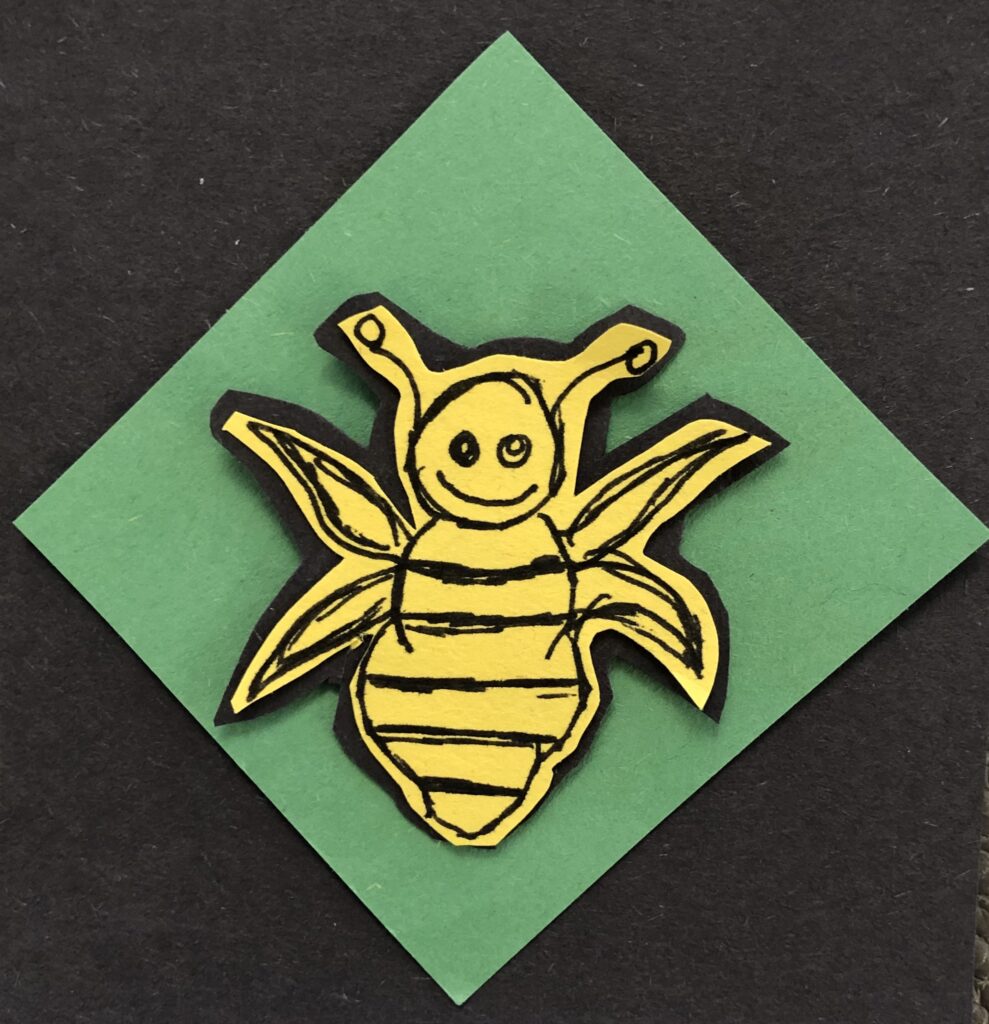
There was a bee named “Harold,” and he was my friend. He was always getting into trouble, but not intentionally. He wasn’t interested in competition of any sort. He kept his head down, and tried to live unnoticed among honey suckle trees. He sometimes got so drunk guzzling the trumpet-like petals, holding them to his face and pouring them into his mouth. He hitched a ride home on my fingers. He was in no condition to fly home under the influence.
One day, I walked outside to witness a struggle for survival, as Harold found himself caught in a spider’s web. He was so afraid and spinning faster than I have seen a hummingbird’s wings. Around and around, trapping himself more completely in the web. I know, I should have let nature take its course, but I couldn’t bear to watch him suffer, so I disrupted a very angry spider’s dinner plans. Very gently, I separated Harold from the web, but the silk was still attached to the little fellow. With powers beyond my understanding, I was able to miraculously pull the web from Harold’s body without smushing him, and then he gratefully flew away from his imminent doom.
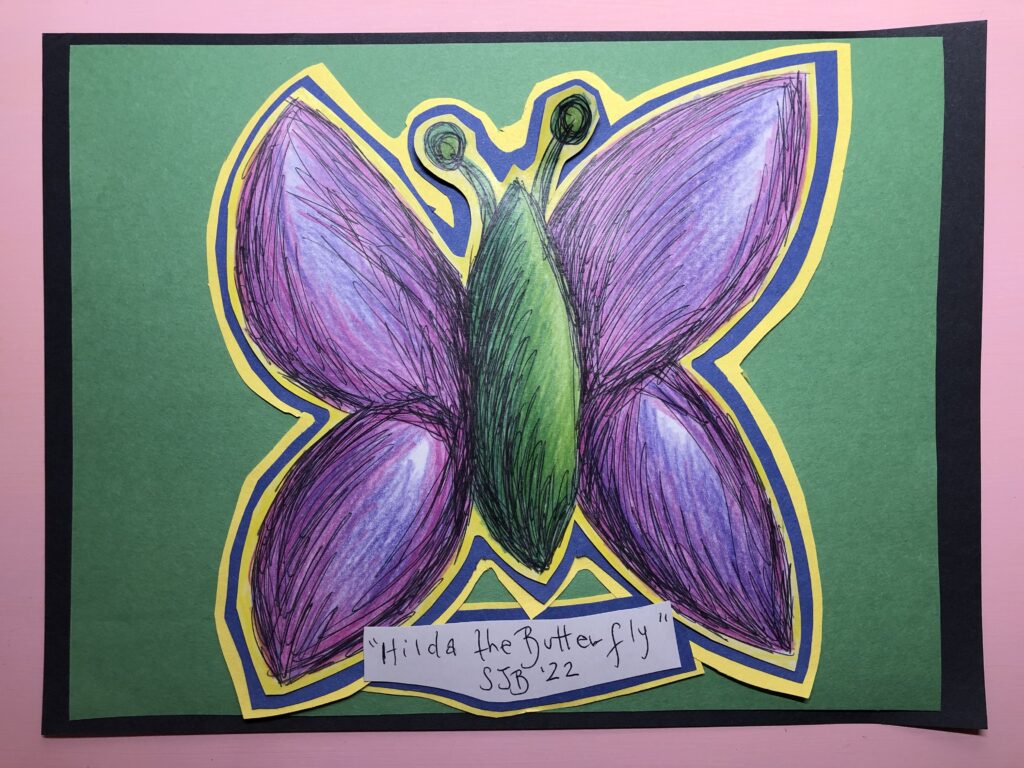
Bees don’t live very long, and Harold knew that he had few chances to complete his bucket list within his short life span. He wanted to see things, do things, and meet kindred spirits. Harold had always wondered what tubing down a river was like. I was tubing on the river one day, and he landed on my lips. I had my mouth closed, so he sat there for a minute, then flew off. Bees are my friends. They often protect me from wasps. Harold took risks that nearly landed him in an early grave. Along the way, he met a very nice butterfly named “Hilda.” Harold had fallen so in love with “Honey,” as all the male bees were chemically attracted to her. He knew he had little chance to win her heart, so Hilda gave him some dating tips. She whispered them, so I don’t know what advice she gave him, but unfortunately it did not go over so well. He joined the group of competitors fighting for the opportunity to expand the hive. Harold was not well received. The other bees beat him down so forcefully that his wings fell off and he tumbled to the ground. I ran outside to stop the fight, scooped Harold into my hand and took him into our laundry room, which has huge windows and lots of light. We had a view of the swarming bee bullies waiting for him outside. Eventually, after Harold had calmed his breathing, urinated on my hand, and accepted his fate, I understood that I couldn’t keep him inside forever. I brought him outside, away from the bees who meant him harm, and placed him with his honey suckles. He guzzled a whole trumpet of nectar, and died peacefully moments later, drunk on honey suckle juice.
I know this isn’t a happy ending, but it’s the circle of life. Harold taught me that we should all compare our life spans to the moments of a bee. Having much shorter lives give bees more reason to live in the now and to cherish every moment. We can learn from Harold. Enjoy life; love your family and your neighbors as yourself; do not take anything for granted. We don’t know how our lives will end or when. It is best to spend that time wisely.
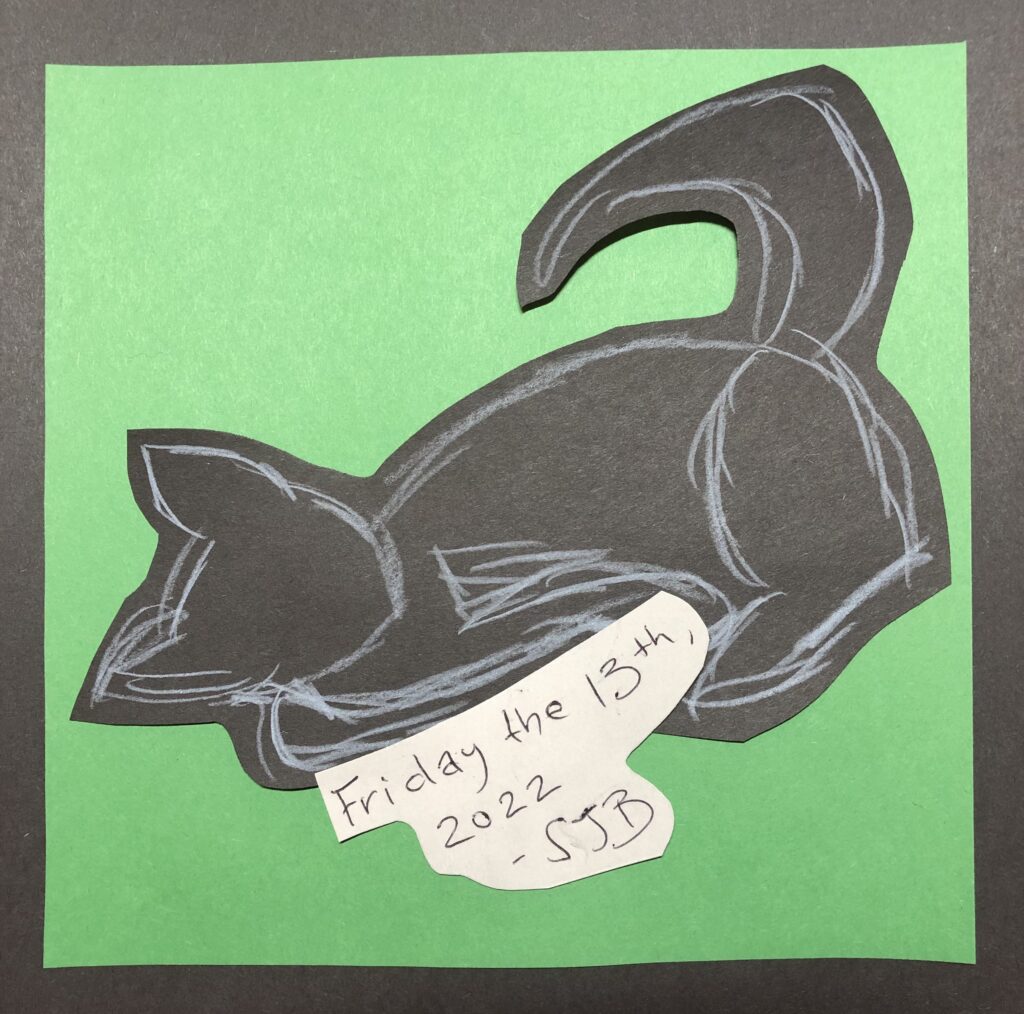
I love Friday the 13th. I was born on the thirteenth of January. Thirteen is my favorite day and color, and a lucky day for me. If I had a cat, he would be black with green eyes, but my husband is allergic. We settled for a “cat-size” black dog with brown eye brows. We love him better, anyway. Many people associate this day with bad luck, superstition, and black cats with green eyes. They approach the day with trepidation. It reminds me a bit of the misfortunate children whose parents denied them the pleasures of trick-or-treating and Harry Potter. I also see this day as a chance to binge watch scary movies and stay inside with pizza, away from imminent doom. When we watch scary movies, we enjoy the darkness the characters experience. We tend to believe, “That could never happen to me.” Never say never. It is a day to ponder why the “bad guys” became bad guys.
The roots of many “villains” are often overlooked. There are trees tall enough to spout volumes about how the “bad guys” weren’t all bad. The “good guys” take precedence, and the criminals are instantly evil, with no back story. Frequently they have untreated psychiatric illnesses and are deemed incompetent. Many “bad guys” are committed to asylums (an antique term for a psychiatric hospital). Incompetent. Committed. From experience, I know how frustrating, infuriating, and painfully heavy those words are, and how much smaller the room. I think that “villain” is a tough label to give someone you don’t understand. I know how it feels to struggle, and how your brain can at times explode with rage. Every villain has a story. Everyone has a story. Everyone. No matter how short, long, exciting, adventurous or boring. Friday the 13th can be just another day. The beginning of the weekend, a break from hard work. It can also be a special day to test your own competence and to feel compassionate toward others. Cuddle up with your black cat, and keep him inside. Today, do not let him cross the street.
–SJB
*I will be taking a break from publishing blog posts, no more than two Fridays. It is not because I have run out of things to say. I am having some trouble with my eyes and will be limiting my screen time. I will return soon. Thank you for your patience!
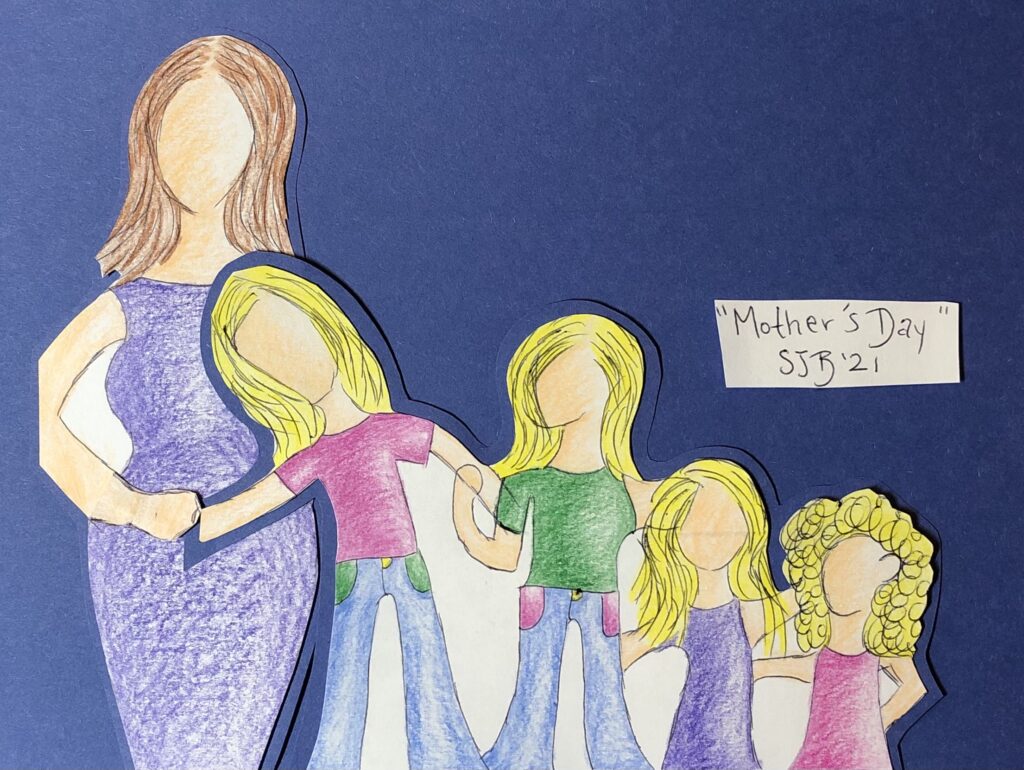
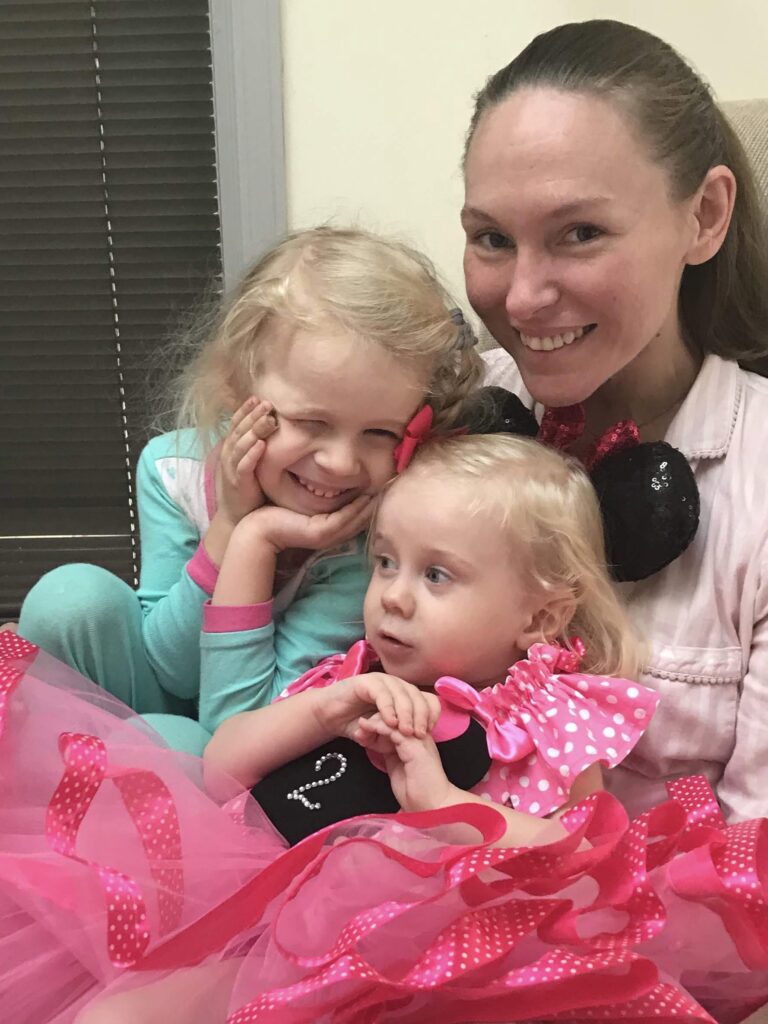
What is a mother? She is your first home. She teaches you how to breathe, eat, walk, talk. When you’re little, she holds your hand when you cross the street. For those lucky few, she never lets go.
Fur babies are children, too! My mom has four human daughters, and is the grandmother of Logan, Marty, Ed, Murphy, Beans, Nugget, and Gizmo (four dogs and three cats).
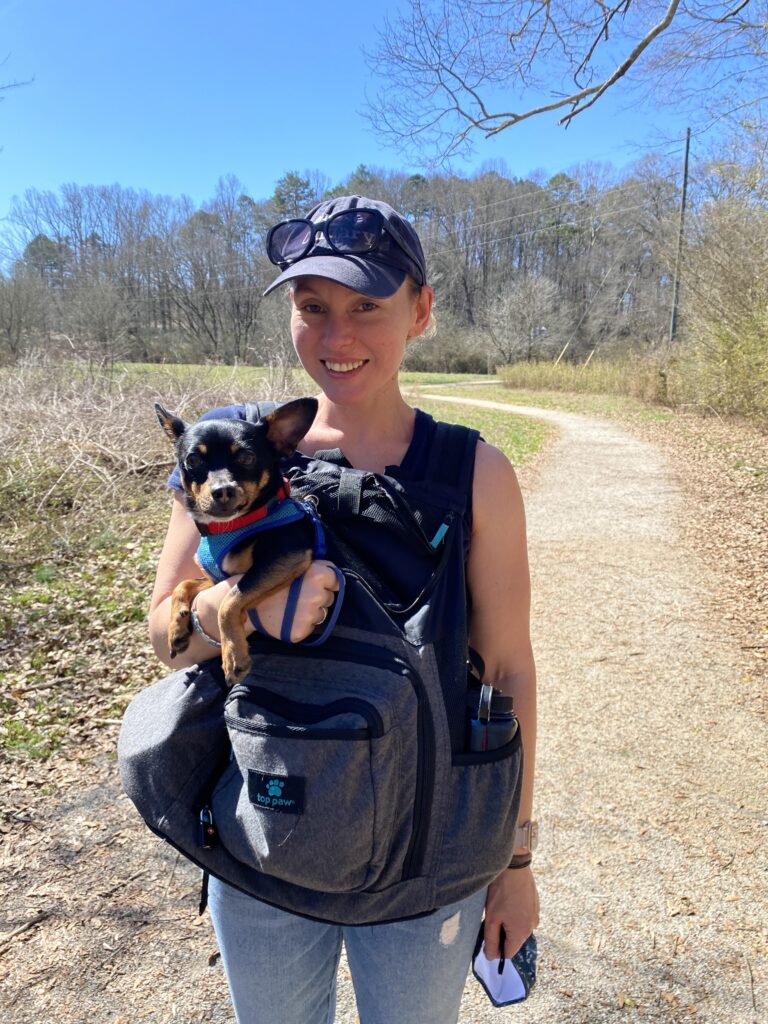
I am a dog mom. Logan is a dog, but he is my kid.
Today, we celebrate moms of every kind. Thanks, Moms!!
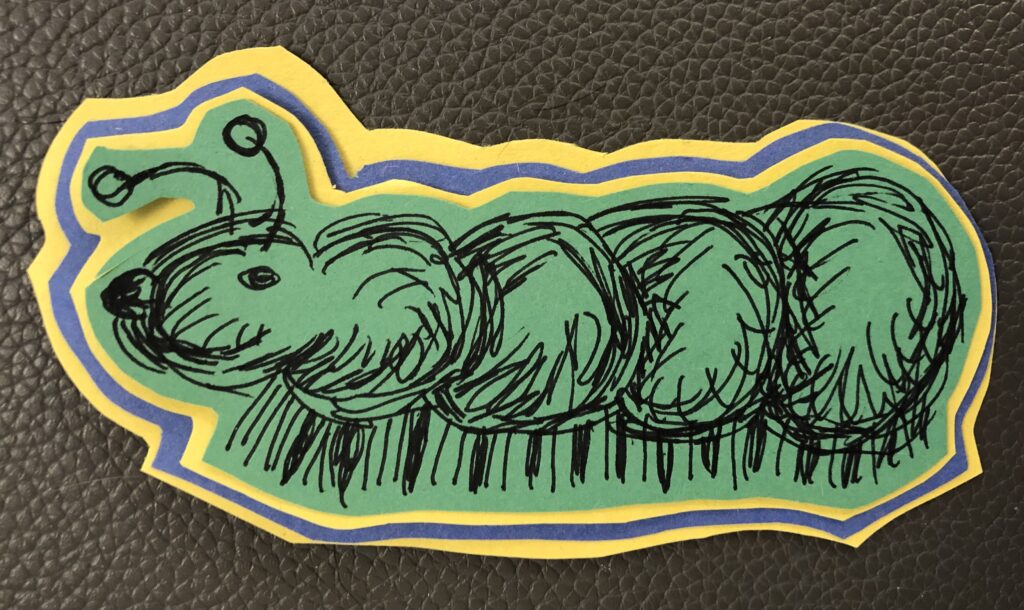
Once upon a time…there was a caterpillar named Hilda. She had no close friends in her community. Her friends had all abandoned her because she was still a caterpillar and they had moved on to the next phase. The butterflies there had deemed her “abnormal,” mostly because she was still a caterpillar and possibly would be for the rest of her life. She thought something must be wrong with her, because she was “different,” and “different” is scary to “normal” people. They locked her up in a tiny box. She didn’t know how long she was in there. Hours? Days? Months? The days bled together. It was a space too tight to build a cocoon. Hilda had tried to be normal and to act the way other caterpillars acted. She tried to be popular. Hilda’s goal as a caterpillar was to be such a beautiful butterfly that others would desire wholeheartedly to be her friend. Several groups of friends had pushed her out or moved on. There was trivia, writing groups, game nights, and hero quests. Everyone shut her out and she ended up in this box, confused and alone. Hilda’s real friends all lived far away. Sometimes it struck her in the gut when she realized she might not see them again if she never made it out of this box. Hilda began to believe that she built this box around herself to prevent inevitable heartache.
Hilda learned a lot in the box as she accepted defeat. She had searched for every possibility of escape. She began to know herself better than anyone ever could or would again. Hilda was changed. She was not a butterfly and would never sprout wings, so she settled in and succumbed to her dark captivity. One day, her situation altered drastically. There was a sliver of light peeking through a corner of the box. Had it been there long? Why was it here now? Seeing that light instilled hope inside Hilda. Was help on the way? She shielded her eyes, as they adjusted to this new development. Next, the walls seemed to crumble and fall away. The caterpillar felt a strange tingling between her shoulder blades. Was her period of solitude falling down around her?
When Hilda could see all she had been missing, the first pair of eyes she saw were her own. She was looking into a pond of fresh water. How did she get there? Surely, she had not crawled. Maybe she was so glad to be outside that her tiny feet started moving and never wanted to stop. But how had she gotten to this place so quickly? How far had she traveled? Upon further inspection, Hilda observed the beautiful wings on her back, fluttering in a soft breeze. Now she could visit her real friends. Hilda came to the conclusion that it didn’t matter what she looked like, or what people thought of her. She was finally free, and eternally grateful.
I will be writing a couple of short stories for the next two weeks. Among the stories are segments of grief related to mental illness and feeling alone. While they may or may not be happy stories, I hope you find them entertaining and thought provoking.
I have few friends, because I am picky. I know when I encounter a good one, and never let her go. But not in a creepy way.
Diana and her husband, Lee have been my best friends for many years. We met through work. They are good at keeping secrets, as best friends are expected to do, but they are so much more to me than best friends. They visited me often while I was in the psychiatric hospital in Savannah, GA. They did not think I was crazy. They were very supportive. They kept my whereabouts a secret because I wanted to keep that part of my life hidden from the public. I didn’t want anyone to know where I was, as I was embarrassed about my illness at the time.
I am “Aunt Sam” to their two sweet, highly intelligent, beautiful girls, and I have always felt like part of their family. I love the two of them and their daughters with my whole heart.
This is a silly exercise, but Diana would call it magical, because she’s cool like that. I will imagine the day I met my best friends’ from their point of view. These are friends who have never turned me away and have loved me as I love them. I will try to predict the inner workings of those minds when we first encountered one another.
“Diana meets Sam”
“I am a music teacher, and was teaching my 3rd grade special needs class. The kids are always accompanied by a paraprofessional. Miss Buice (Sam) was the paraprofessional in that classroom. One day, Sam came up to me after class and-very much like a kindergarten student-asked if we could be friends. “You are so fun!” she said. “Will you be my friend?” I said, “Totally!” and we exchanged phone numbers. I was new at this school and didn’t really have any friends, so I was happily surprised. After that, we spent a lot of time together, never running out of things to talk about. She has been in our lives far longer than we have had children. We take turns venting and listening, much like free therapists. Every Thursday was “Pool Night,” and Sam accompanied me while my husband, Lee played pool with his team. We both feel comfortable sharing things between us that we could tell no one else. She loves our kids as if they were her own.”
“LOGAN meets Juniper/Emily meets Sam”
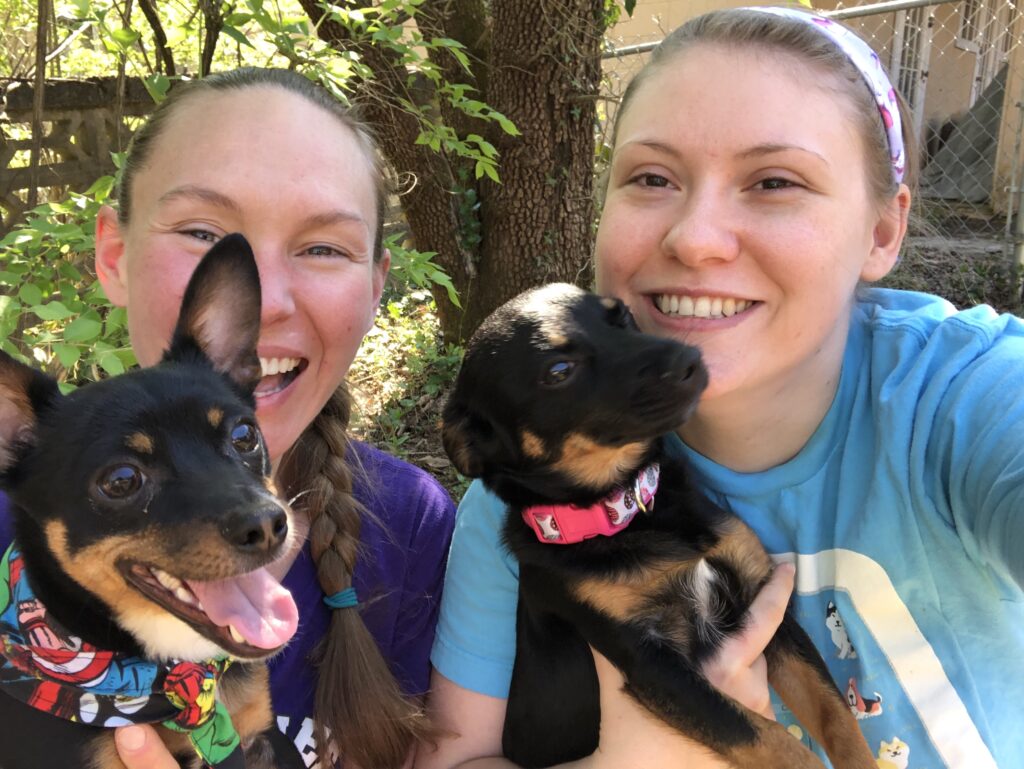
My dog, LOGAN, has an Aunt Emily, and a sister named Juniper. This is how we met, maybe accurately, from Emily’s account:
“I am a waitress in a restaurant low on staff. I have a hard time saying “No” when asked for help. I am always cheerful and everyone would describe me as a really sweet person. I am worked until I almost drop from fatigue. I am always following orders, taking orders, checking people in, and wearing a smile, as I dream about getting off work and returning to my couch, finally resting my legs. I have a new puppy, and cannot tell you how much I am about to explode with desperation and excitement to see her greet me when I get home. Her name is Juniper, but we call her Juni. She is so sweet and tiny. We rescued her out of a litter of puppies in a shelter near Helen, GA. We went out of our way a bit, out of county to pick her up. When we adopted her, there were two remaining puppies from a six puppy litter. There was only one boy. One day, a regular came into the restaurant for a take-out order, and a woman was with him, carrying a puppy which looked very similar to my own! We introduced ourselves, and I showed her a picture of Juniper. The likeness was undeniable. I asked her where she found him, and we had adopted both puppies from the same litter! She introduced me to LOGAN and we talked about setting up a playdate. That is how I met Juni’s “S-A-M,” and LOGAN met his “Aunt Emily.” Sam and I have been friends ever since, and the two siblings have a playdate every week”
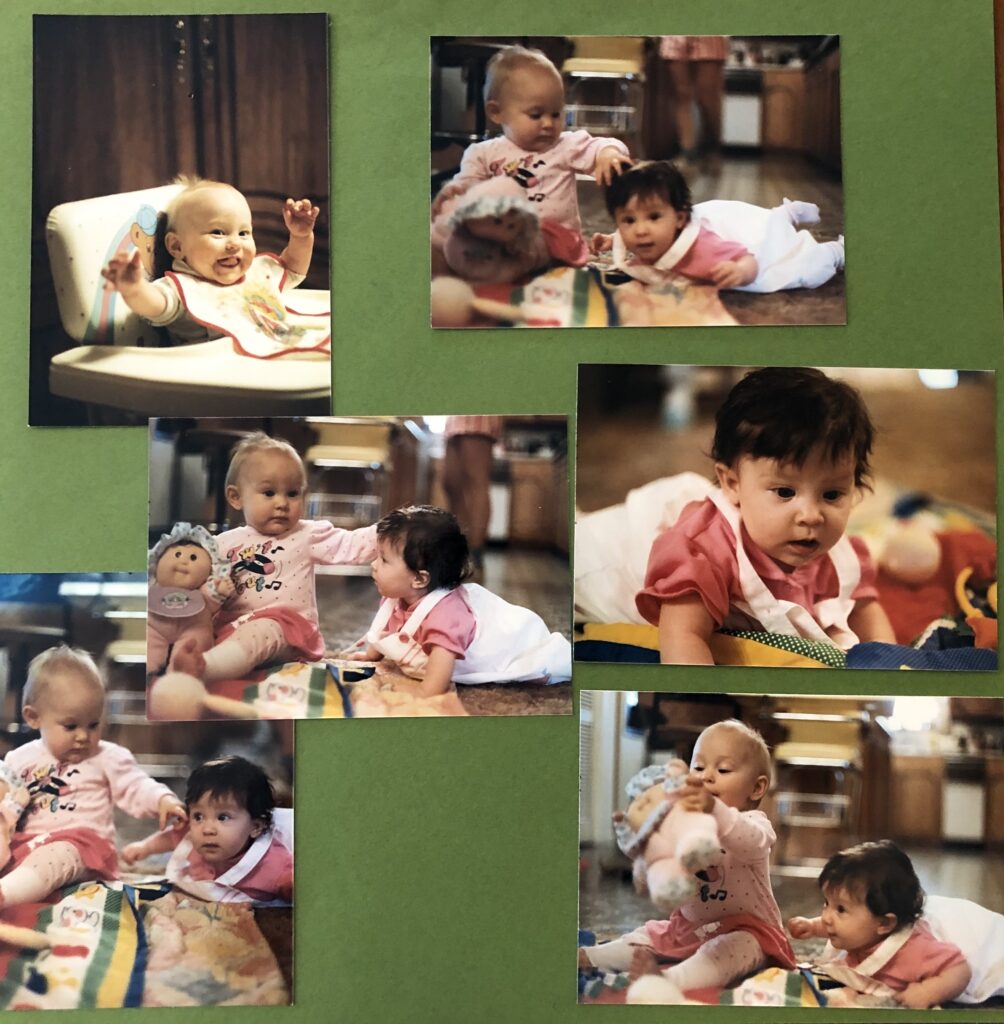
Courtney meets her cousin, Samantha, not for the first time:
“She stole my toy. She has the advantage. She can crawl and sit up. She is very close to learning how to walk. I better prepare for that. I will hide all of my toys when she comes to visit. When I can sit up and crawl. I am a sitting duck in Superman stance. Will I get my doll back? Probably not. By the time the grown-ups realize what has happened, they will assume the doll is Samantha’s. Then she will take it home and I won’t ever see it again. I loved that doll. Samantha is growing quickly into a bully. I love her anyway.”
I have a few more friends, but mostly they are my sisters, and I talk about them all the time. I wonder how my friends’ accounts would differ from my own. Just for fun.
There are several avenues of media–including news articles, films, books, and other forms of communication–with more questions than answers. This is why the media should either keep their heads buried in the sand when it pertains to unknowns, or change their tunes. Many make assumptions and publicly announce suspicions, fears, and misunderstandings about mental illness throughout their network. They feed the public what they perceive to be “truths,” of which they really have no idea. These suppositions feed the stigma and set us back in our quest toward acceptance, love, and equality. One who has suffered under these circumstances–occupied a tiny room alone for several months–can tell a true story about the injustice of the system. Recovery from all of the trauma I have experienced in the hospital takes time. I will be holding on to that trauma inside my brain for the rest of my life, trying to set it free. That very same brain possesses my depression, anxiety, mania, psychosis (to name a few). “She” is living proof that this illness exists, is treatable, and that “crazy” does not exist. Unfortunately, that proof is intangible. Therefore, according to the notorious “They,” the proof does not exist. To see is to believe. Everyone thinks nothing will touch them. “Not me,” they say. “Never could this trauma attach itself to my life. I am invincible.” Until it does. Then, they become part of the unknown, and will never be “normal” again. Never say Never.
The media labels people with psychiatric disorders. We are bullied, misunderstood, and often the butt of a joke. Misunderstanding stands alone, but add cruelty to the mix. Emerging victoriously from a psychiatric facility should be recognized, a cause of pride and celebration. Sadly, this fact is often buried beneath the rug or six feet under; distanced as quickly as possible. Instead of triumph, your word now means nothing because you were deemed incompetent. Sometimes, when the whispers grow from seeds to weeds, people with mental illness are approached as though their struggles are contagious. Even pity, which is meant to be polite, only feels like distance.
I have read and watched several movies with elements of jest at the expense of the mentally ill. I try to push through; I get mad, then sad, then turn it off. It is a personal challenge to ignore horrible statements such as, “My father married a bipolarity woman who had her ups and downs. When I marry, I will not make that mistake.” Or, “He used to be a genius before he became mentally ill. Isn’t that how it always goes?” It infuriates me to read these words, but I take a break, breathe deeply, and continue, with the knowledge that the author is quite ignorant. If I quit at every insult, I miss out on the good parts. I have decided, despite the irritation, to push through. It certainly has its difficulties.
I imagine that those most afraid of “crazy” people are truly fearful that their own sanity may be called into question. I would venture to say that everyone is playing pretend to protect their own “normality.” Such a state is unobtainable, just as sure as “crazy” is nonexistent.
We ARE desirable and we DO have voices! Let them be heard!!
“There’s no such thing as normal. There’s no such thing as crazy.
We’re all a little in-between and the line is very hazy.”
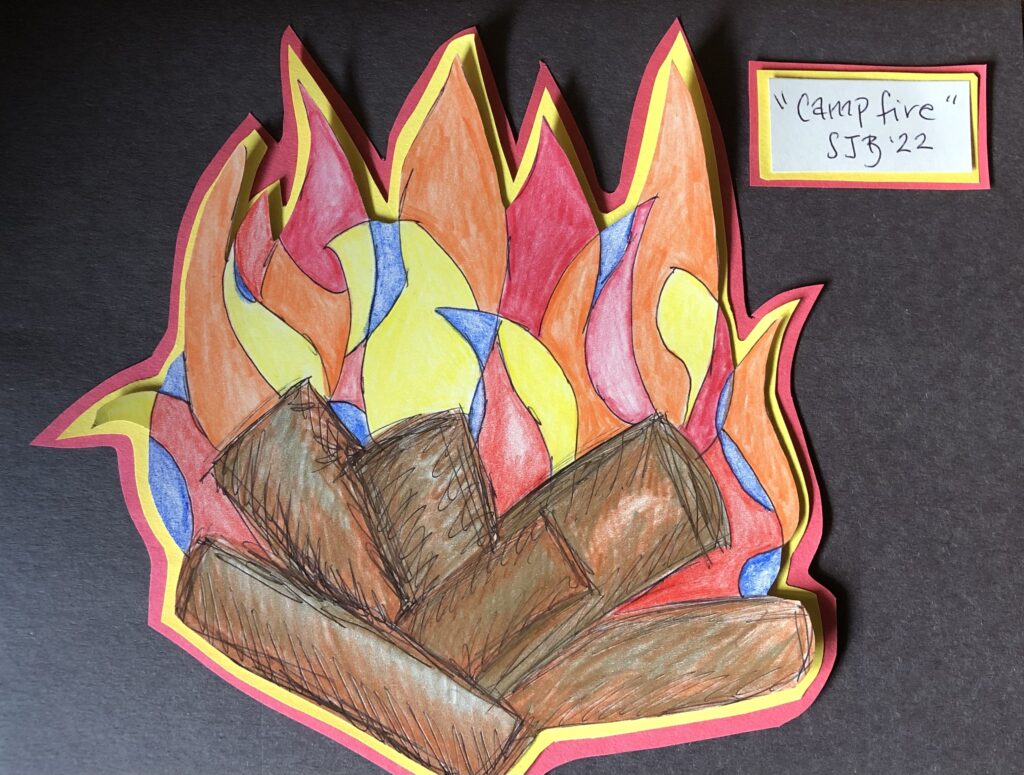
My family has always been drawn to the earth. We would all rather be outside than in. My sisters and I grew up hiking, camping, swimming in whitewater rivers, kayaking and sitting around campfires sharing secrets and telling stories. Campfires were magical settings which brought us closer together. Each member of our family is tethered to one another. Our lines of communication have always been open and honest. We swept nothing under the rug. Everything was discussed and resolved. Most of the time this happened when we “passed the stick.”
When “passing the stick,” whoever holds the stick has the floor. Only that person can speak about their issues, and once the stick has been passed around in all different directions, the situation is handled and the family meeting is over. Oh, how hard it is to hold your tongue until it is your turn with the stick!
Time flies by. Everyone moves in different directions. If the stick were passed around now, it would take days to catch each other up or to resolve issues, no matter how old. It’s important to check in with each other so that you can grow up together instead of apart. Our parents anchored us so that we would never drift away. Sometimes a campfire is needed to remind us of who we are now, as well as the part we play in our family.