This is a story about the importance of emotional support animals to their people. It is a fairy tale based on reality, a guide to adolescents discovering their new relationships with “Berman” and how to handle him with help from our furry family members. This book is in the process of being published and will be available soon! Stay tuned!
The mind is a powerful entity. Much of it is still a mystery. What causes us to dream, to remember, to recognize the people in our lives, and to comprehend the situations happening around us? I don’t have these answers, but I am no stranger to memory loss and lack of recognition.
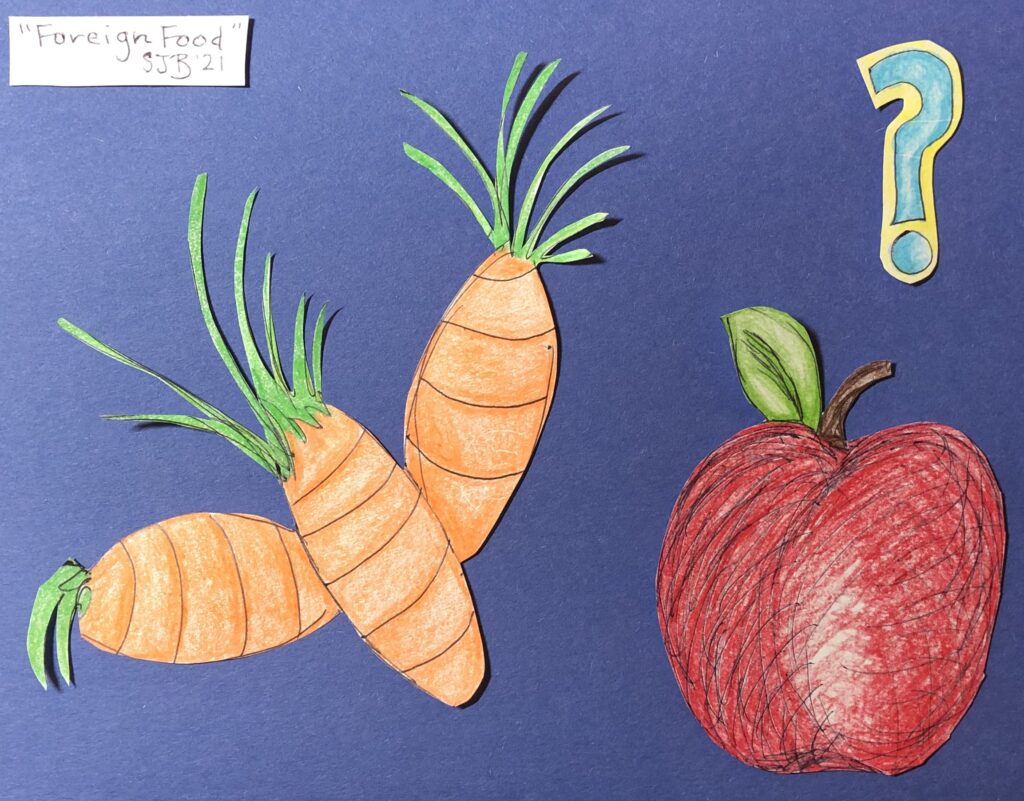
When we are children, we are taught basic table manners. We learn how to use napkins, utensils, and to keep our elbows off the table. I never imagined that one day I would not recognize the relationship between the utensils and the food. The key to starving is forgetting how to eat.
I tell this story many times over because this is something I will never forget and letting it out helps with the pain of remembering. While I was in the psychiatric hospital in 2013, I didn’t realize that the medication the doctors were trying to force down my throat was for my benefit. I couldn’t recognize that the doctors weren’t “bad guys.” I had horrible dreams that felt so much like reality. They clouded my judgment and caused me to believe my delusions. It was nearly impossible to talk me down.
Worse than mania, depression, psychosis, memory loss, or delusions, was not recognizing my parents and loved ones. I understand now how much harder that was for them than it was for me. I have been reminiscing today and some terrible memories have come to light. I am sure that during our sheltering in place we have all had time to think about things we wanted to bury. Memories can be repressed, but they are always in the back of our minds, waiting to be remembered.
Sit down. Write down what you are remembering, good or bad. It may help you to release some of your emotions. While it is more fun to drown our sorrows by binge watching television, we have to do the real work of recognizing our deepest traumas if we are to put our bad memories behind us. Talk to someone you trust. Release your emotions. Recognize your feelings. Cry. Laugh. Heal.
The season of Easter within my faith is the celebration of the living God. It is the miracle of the resurrection of Christ on the third day after the crucifixion. On Palm Sunday, Jesus’s followers paraded through the streets with gusto believing that their king and prophet was going to smite their enemies and raise them up to power. They had great expectations for the Son of God. Most did not listen, understand or accept his parables as he taught them what was to come. During the Last Supper, the disciples broke bread and drank wine together, symbolic of God’s sacrifice and the bond we all share with God even after death. Many did not understand the significance at the time. Their expectations were not fulfilled. As Jesus was dying they could not imagine a resurrection, though he tried countless times to open their eyes. This story has been passed down for thousands of years and we know what happens, but at the time the people did not. They relied on their faith as we do, but watching their hero appear vanquished made room for doubt in their hearts. When Jesus was resurrected, doubt was replaced with awe. We are now blessed with the knowledge of what transpired so long ago, though we did not witness these events first hand.
This year during the Palm Sunday service I cried as my father read the portion of Mark’s Gospel, in which Christ is crucified. I usually do. This year, even sitting at home attending virtual church I felt God’s presence within me and all around me. I broke out in chills. It was a very rainy day, and I found time to talk with God. I thought maybe the rain drops were tears from Heaven, expressing God’s sadness about the sacrifice which saved us from sin.
We preach that God is love, and not to be feared. We buy new spring dresses to wear to church. We have an Easter egg hunt after the service. An Easter bunny visits the children. Easter is about so much more than running around trying to collect the most candy. We must not forget this. This is a sacred week to study and pray. It is a time for silence and searching deep within ourselves to define what really controls our lives. Money? Power? Comfort? Material objects? It gives me hope and a feeling of security to have faith in a higher power we call by different names. We are all here together. I think we should try to make a conscious effort to help each other and to spread hope and love no matter what we believe. Jesus teaches me and many others that death is not the end. It is the beginning.
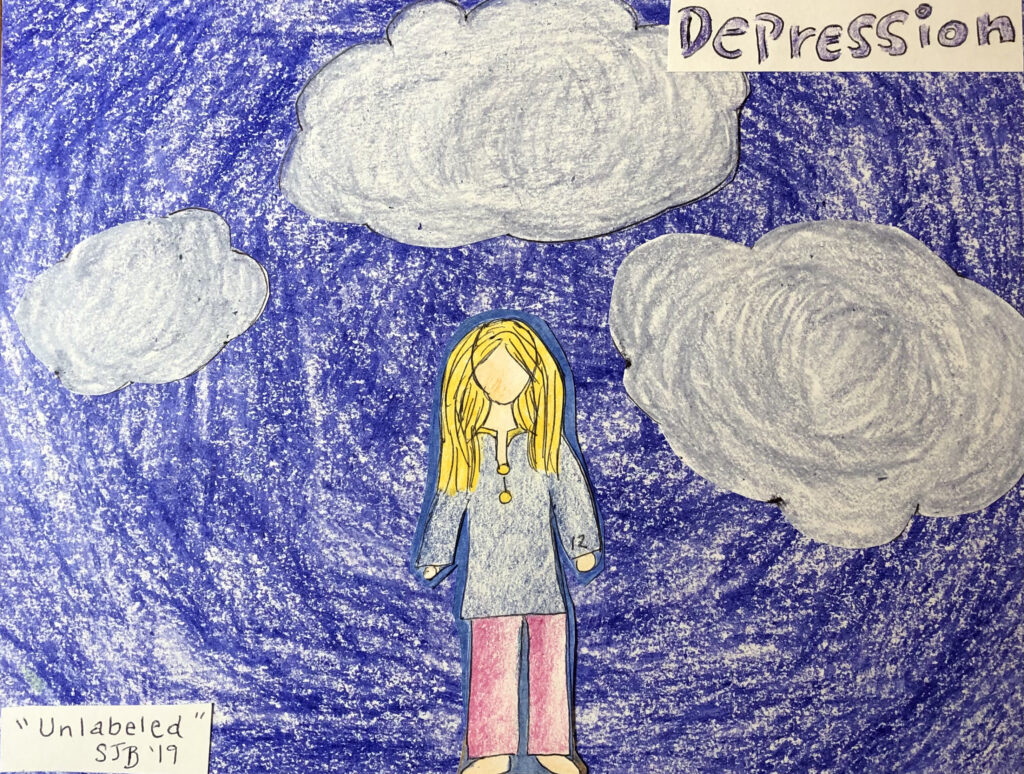
I am currently experiencing the deepest depression I have encountered since the very first time I was depressed. It is not because of oatmeal, or apple juice, or any underlying reason I can think of. I haven’t been triggered. Still, the depression washes over me like a tidal wave from which I cannot surface. There are key differences between the depression I am suffering now and the first time it coursed through my veins. This time, I know that with the right medication and therapy I will push through to the other side. I have shared bits of my first depression story, but not all. I will try to recount those first few hard weeks.
When I was twelve years old, and Justin Timberlake was around eighteen or so, I had a mad crush on him. N*SYNC is indisputably the best boy band the world has ever known. When I was twelve, I loved listening to one of my favorite N*SYNC CDs every night, crying myself to sleep. It was so moving and romantic and I figured I would never love another person the way I loved Justin. But he would never know. I figure that’s a reason to cry, but it wasn’t the reason for my silent suffering and the tears that spilled from my eyes.
At the time, no one knew how to help, and I just thought it was normal to feel that sad. As time passed, I began to realize that there really was something going on in my mind but I didn’t know what to do about it. My pediatrician tried to figure me out, but psychiatry wasn’t his area of expertise, so my suffering continued for a few horrible weeks and then it became a little piece of myself that never truly went away. I stayed at home from school for about a week, wrapped up in comforters without an appetite and drinking only apple juice. This was a time of much change in my life. My family moved to an unfamiliar part of the state, and still my depression enveloped me. I skipped school, and my mom stayed by my side to help me with my mountain of make-up work. I remember sitting on the floor wrapped in an old blue sleeping bag while Mom and I made it through The Odyssey. Then the veil of depression was lifted and I went back to my new school, made friends, played soccer, and strived to be “normal.”
Now I am taking an anti-depressant in the mornings and it hasn’t really kicked in yet. I take a load of pills at night to help me sleep because that is very important for my condition. Mood stabilizers keep me from having too much energy, but lately they have been pushing me down really hard. The mood stabilizers I am currently taking are so very helpful most of the time, but they reduce the serotonin production in my brain. Serotonin is the chemical in our brains which causes us to feel happy. I have never felt so far away from happiness.
It is important to note that I am not suicidal, no matter how unhappy I am. I have many reasons to live, and many people I love. I will make it through this. That is the key difference between my first bout with depression and this one. I know I will heal, no matter how slowly. If you are feeling as miserable as I am and depression darkens your door, know that you are not alone. There is a light in the darkness.
This too shall pass.
—SJB
P.S. Now there is a man in my life who inspires smiles and laughter instead of the tears that JT brought upon me every night when I was twelve. I just had to wait twenty years.
Triggers are events or reminders of past trauma which can send a person over the edge into mania or depression.
Triggers can be big ordeals, or small details that open up a part of the brain and reintroduce the trauma a person has experienced. My triggers began with apple juice.
My dad is an Episcopal priest. When I was in the eighth grade, I was told that we were moving away from the town I grew up in. I was feeling uprooted. When you are the daughter of a priest, you are not supposed to tell anyone if, when, or where you are relocating until the whole church is informed. I wasn’t even allowed to tell my best friend. Unfortunately, it took her a while to forgive me for keeping such a secret from her, but it was my duty.
Once reality set in and the move was impending, I got very sick and stayed at home from school for a week. I laid in my parents’ bed and didn’t eat or drink much other than apple juice. It was the beginning of my worst depression. To this day, I cannot drink apple juice without being reminded of that depression and once reminded, I start to sink.
Another of my triggers is oatmeal with butter and brown sugar. It reminds me of the days when I was literally starving, in a hospital that couldn’t take care of my needs. Trying to fatten me up, the women serving breakfast always gave me an extra bowl of oatmeal. I remember a man in line behind me ask, “Hey! Why does she get two bowls?” To which the woman replied, “Look at her!”
Now, when I eat oatmeal with butter and brown sugar I cannot help but think of that time. It reminds me of sick days spent in bed as an adult skipping work. I stayed away, depression enveloping me. I burrowed into my blankets and felt the guilty aches of anxiety deep within my core.
Anxiety is the trigger that has the biggest effect on my life. I cannot work, because I cannot handle the stress. I have been unable to keep a steady job because of my disability. I cannot even handle a part-time job.
As my illness progressed, I began to recognize running as one of my most heartbreaking triggers. It was always my favorite activity and my greatest escape. I have ruined my knees due to years on my feet. I no longer run, but it is not solely due to my injury. When I run, the occurrence of an ocular gyro crisis is highly likely. An ocular gyro crisis is involuntary rapid eye movement. I lose control of my eyes. It is an extremely rare side effect I inherited from one of the many medications I was prescribed in the past. Running also invites the voices into my head; one voice is encouraging and the other is reckless. Although I realize these consequences, my desire to run is high and my loss of running is emotionally painful.
Even if you don’t have a mental illness, everyone has triggers. Sit down and write a list of the things in your life that make you “tick.” Once you have named them, they will be easier to circumvent.
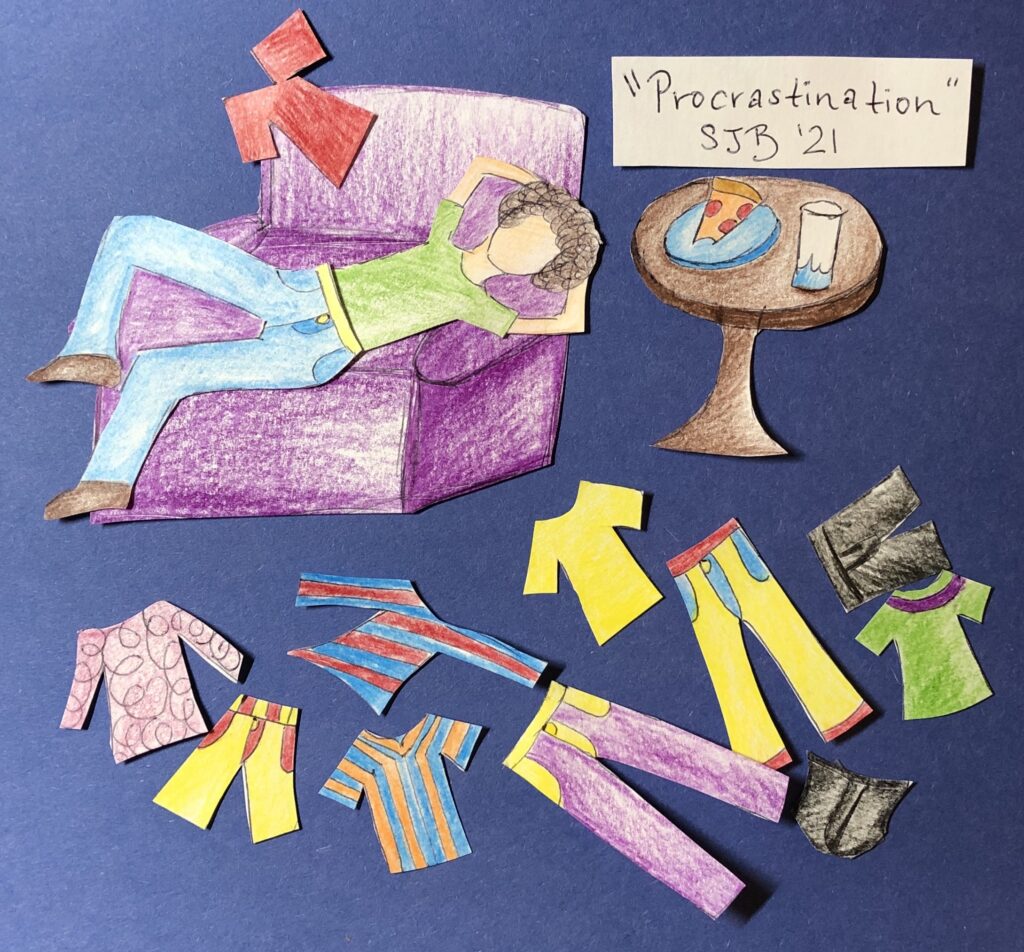
Waiting until the last minute gives some of us extra motivation to finish work when the deadline is impending. For others, dread fills us to the brim. Often, the work doesn’t ever happen at all.
Procrastinators are often characterized as “lazy.” For many years, I accepted that as my own character flaw. My views on the matter were altered when I entered therapy.
I didn’t work with a therapist until five years into my illness. I had a psychiatrist, medication, and lots of problems. I had no idea how much I needed to talk to someone.
I began seeing a psychologist in 2009. It changed me forever. I released my emotions, worked through several problems with her guidance, and would not be the same without her help.
I was in college studying art. I started skipping my drawing class. It was too difficult for me. I have always had trouble with perspective and realism, beginning in my Thursday afternoon art lessons in elementary school. Trying to depict reality has always been so frustrating for me. I was in the dark until the fifth grade, when I realized that there are other techniques and areas of art to explore. I didn’t have to make things look real in order to express myself!
In that college drawing class, though, it was vital in order to pass and the teacher was ruthless. He was especially stern with me because I wasn’t improving despite his suggestions. So I skipped one of his drawing classes.
Then I skipped another, and another. I skipped a week of his drawing classes. Then I stopped going entirely.
With a stomach full of dread and my anxiety level through the roof, it seemed that the more classes I missed, the harder it would be to catch up. Therefore; I never returned. Procrastination as I have never seen the like.
I suffered through every day of college, unstable because of my mental illness. I didn’t seek help from the Disability Resources Department because I didn’t know it existed.
It wasn’t until years later that I learned a fact of utmost importance from my therapist. My “laziness” and procrastination were tied to my mood disorder. Sometimes I was literally “not in the mood.” And it wasn’t my fault!
Try not to punish or misunderstand the procrastinators in our midst. Truly, sometimes there is an underlying reason for appearing “lazy.”
Next time you feel “lazy,” or continue to spiral into procrastination, look it in the face and ask yourself where it comes from. It could be a characteristic of a mood disorder, and entirely no fault of your own.
It is something to ponder, whenever you’re in the mood.
In the Episcopal Church, we celebrate a season called “Lent.” It is a time to reflect on choices we have made in our past, forgive ourselves and others who have wronged us, make a sacrifice for the entirety of the season (giving up a bad habit or quitting something in our lives we feel is wrong), and to take up a daily or weekly practice which will strengthen our relationship with God.
We have given up so much already. We have covered our noses and mouths in attempts to save ourselves and our neighbors from a deadly virus. We have kept our distance from family and friends. We have celebrated holidays in the most unconventional ways. We have lost loved ones. It may seem a tough calling to give more to God. Prayers, certainly. More sacrifices?
I have decided to be more grateful and to take nothing for granted. Today, I would like to voice a sense of gratitude I feel for the people who are doing everything they can to help others. I feel very grateful for those protecting each other from COVID-19 and all other perils this world has recently thrown our way. I want to thank those who are continuing to stay the course as we dream of “normal” daily lives ahead.
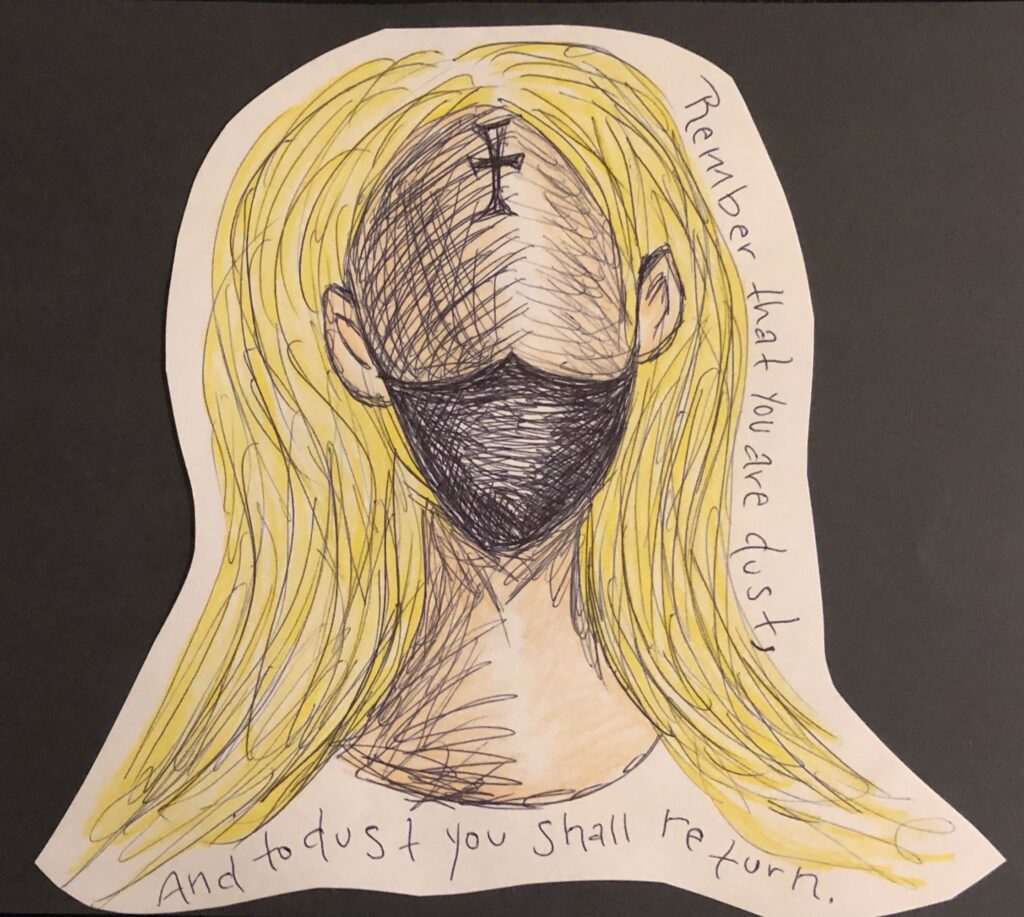
I am grateful for the life God has given me. I am ever thankful for my family and friends, my husband, and the knowledge that this is not the end. We are reminded in this season of “Lent” that we are but dust, and to dust we shall return. If that happens sooner than later for me, I have lived a full and happy life with no regrets. I have learned to love deeply and I believe that one of the most important lessons life teaches us is to love our neighbors as ourselves. This proves to be difficult for us all. There are people in our lives who are hard to love, but those are the relationships that need love the most. They are the challenges God has given us to make peace with one another, to reconcile with those around us from whom we most differ.
If you are angry with God and feel abandoned, I implore you not to give up on God. A spiritual practice can bridge the gap in your relationship with God. Even if you feel you have exhausted all of your resources and have nothing more to give, open your heart, soul, and mind to receive God’s healing spirit.
In this Lenten season, I challenge you to set spiritual goals for your relationship with God. If you do not believe in God, or you call God by a different name, know that all beliefs are welcome in this challenge. Make a list of things you would like to change, give up, or a person to forgive. Practice these spiritual goals in the weeks to come, remembering them always in the back of your mind. This is not a New Year’s resolution. It is not a goal like losing weight or a secular practice like writing a letter to Santa. Look deep within yourself and see what changes you can make to bring you closer to God. You will gain a better understanding of love and hopefully strengthen your relationships with your neighbors.
As we say in the Episcopal Church, “Peace Be With You.”
In my younger years, I dreamed of having a life similar to my parents’ life together. I would meet a man in college, fall in love, get married, and raise children. To reiterate an article I recently published, this plan was set in motion by playing with my sisters and living life through Barbie.
Playing with Barbie had its flaws. One of the largest problems was having only one Ken doll surrounded by several Barbie dolls (I’m quite certain he had no complaints). The bigger issue was that the game always ended in happily ever after with marriage and children. We had no idea what life held in store for real people beyond that.
My childhood fantasy of marriage and children continued well into my adult years and I looked forward to a wedding day, a husband, pregnancy, labor, and kids. That is what it was, though–a fantasy. I didn’t think of the struggles of marriage, the sleepless nights when children wake or never sleep at all. I did not consider the financial and physical strain of real life; I only dreamed of having a family of my own.
Though I know that the life I wanted then is not the life I want for myself now, life dealt me a cruel hand. My illness is too severe to toy with the idea of sleepless nights, carrying babies, or stress the size of elephants. My mind and body have suffered so much trauma that I have a strong probability of developing postpartum depression, psychosis I may never be able to shake, or worse.
The sense of loss I feel is not tied to the reality of what parenting involves. I would have liked to have the choice, though, to physically give birth, to create life. Sometimes it feels to me that life didn’t even give me lemons. On the upside, I have not given up on love and marriage no matter how complicated that may be. I know that in this world there are people who love each other unconditionally and I definitely want to be part of that. Not following directly down my parents’ path, but forging my own.
I have a husband now, and he makes me happier then I have ever been. I can’t have children, and at times that still feels like a heavy loss. I realize now that Barbie and I share something in common–the fantasy. As I have grown older and have accepted my fate, I appreciate the course my life has taken, and know that even though I cannot bear children, I can be happy. I do not think that having children is what defines a woman. I am a woman, but my purpose here is not to be a mother. I want to be helpful. I want my life to mean something to others and not just to myself. I wish to be a mother of words, of books, of change.
We all have so much to worry about, now more than ever. We numb our minds during the day, keeping ourselves busy most of the time so we do not have to face all of life’s challenges and bad news.
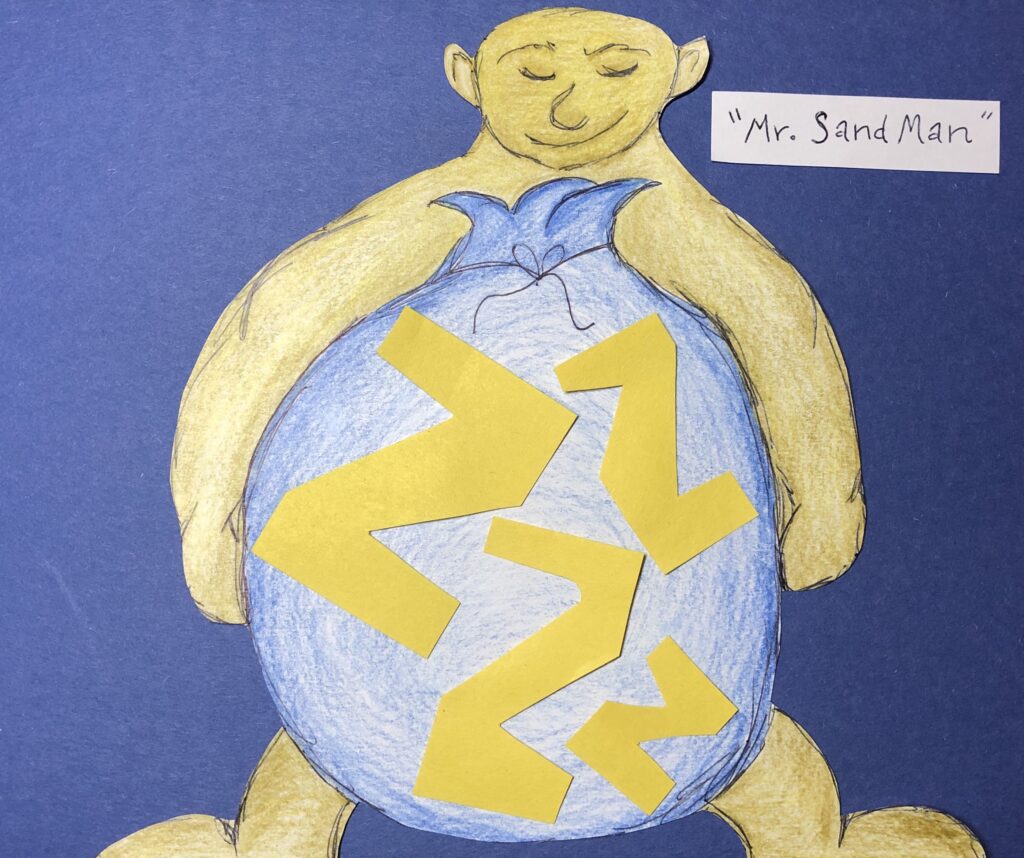
All of that denial seems to stir and gnaw at us during our evening ritual with the elusive “Sand Man.” We cannot deny, hide or change the state of any part of our lives during the wee hours of the night, but oh, how they haunt us.
As a child we are taught to pretend we are asleep and it will come for us. This works for some. Counting imaginary sheep is another alternative. Falling asleep to a parent’s voice reading a story, or listening to a lullaby seems to work for others. When I was almost a teenager, I cried myself to sleep and that worked for me.
When you grow older, as I have experienced, it is much more difficult to fall asleep. Personally, sleep is much more important now, as I do not wish to carry my mind into the swirling tornado of mania.
For a while, it seemed I had exhausted almost all of my techniques for falling under sleep’s spell. I hope I don’t jinx myself by saying that I have been sleeping well, though it is a difficult balance and does not always work. Here are my suggestions in case you have similar problems.
I take evening medication which has proven effective. I have a bowl of cereal with my evening medications, which helps immensely.
Focusing on my breathing helps the most. Inhale, exhale. Focus on nothing else. Leave the sheep in the pasture. Let your breath be your lullaby.
Exercising during the day has a great effect on my ability to sleep. Not only do endorphins fill my brain with true happiness, but when I am depleted of energy it is hard to stay awake, and I look forward to sleep’s blanket.
When I am really struggling, I think of a happy memory and slowly remember every detail. I don’t mind sharing my happy memory with you.
I grew up loving everything Disney. The movies, the princesses, the stories. I have been to the Disney store in New York City a few times, and have happy memories of Disney World as a child. While those memories are happy and Disney related, my happiest trip to Disney World was with my mom and grandma when I was 32.
Mom and I drove down to visit my grandma in Florida before COVID-19, and we decided to visit Disney World together. The fun began when I got into the car with Mom to begin the long drive, and continued when we met with my grandma. We all set off for the park and continued our adventure with the ride from the parking lot to the admission line. I didn’t even mind the lines because of the company I was keeping. I loved the ferry ride to the park and seeing Cinderella’s Castle as we got closer. I loved walking around with my mom and grandma, chatting, buying expensive food and drinks, and waiting for hours to board rides that lasted less than five minutes.
When I run through that memory in my head, I experience happy, relaxing feelings which help me to fall asleep. I think that is the best advice I can afford you.
Remember this advice so that if you have to chase the Sand Man you have a better chance of catching him. Sweet Dreams!